

Business You can start with only $1,000 to a Thriving Business in Africa & Actually Works
The belief that you need thousands of dollars to start is a myth. Across Africa, entrepreneurs are building profitable businesses with less than $1,000 — and the patterns are surprisingly consistent.
The idea of starting a business with $1,000 often feels like a fantasy. Inflation, currency volatility, and rising costs have reshaped how entrepreneurs think about investment. But across Africa, from Kampala to Lagos to Accra, thousands of founders are proving that limited capital does not mean limited potential.
According to a recent analysis in Nigeria's Punch newspaper, success is "less about starting capital and more about strategy, skill alignment and understanding local demand" . With the exchange rate hovering around N1,400 to $1, a $1,000 budget translates to roughly ₦1.4 million — an amount that, while modest by global standards, can still unlock several viable business opportunities .
The question is not can you start a business with $1,000. The question is what kind of business.
The Core Principle: Solve Everyday Problems
The most successful low-cost businesses address daily necessities. As Gbanju Aruwayo-Obe, who has built multiple businesses in Nigeria, noted: "Nigeria's present economic condition could be more challenging for most entrepreneurs. If you want to start any business, I will advise you to start a business that deals with human needs and necessities" .
Food-related businesses, he argued, remain among the safest investments because demand is constant regardless of economic cycles. Selling staples such as rice, beans, and garri within local communities offers predictable turnover .
This principle holds true across the continent. In Ghana, the restaurant delivery market is projected to generate $10.14 million in 2025 . In Kenya, Uganda, and Tanzania, the food economy has long served as a gateway into entrepreneurship, particularly for first-time business owners .
15 Businesses You Can Start With $1,000 or Less
Based on real-world data from entrepreneurs across Nigeria, Ghana, Uganda, Kenya, and beyond, here are the most viable options.
Food & Hospitality
Food-based businesses remain one of the most accessible and resilient entry points for entrepreneurs with limited capital across Africa. A food kiosk selling chapatis, pancakes, and snacks can be launched with just $200–$500, leveraging daily consumer demand, low overhead costs, and quick inventory turnover. The model scales effectively through multiple channels—adding delivery services, offering catering for events and offices, or expanding to additional locations. Similarly, a street food vendor business, requiring an even lower startup cost of $150–$400, taps into the deep cultural love for street food across Ghana and Nigeria, where the low entry barrier allows anyone with cooking skills to start immediately. Scalability in this model is medium but steady: building a reputation for quality and hygiene can pave the way for a permanent spot, which in turn opens doors to a wider customer base and higher margins. Both businesses highlight a fundamental truth: food is always in demand, and with smart positioning, even the smallest operation can grow into a thriving enterprise.

For entrepreneurs ready to move beyond the food stall, mobile kitchens and catering offer scalable pathways. A mobile kitchen or meal prep business ($300–800) taps into rising demand for home-cooked meals, scaling quickly by partnering with delivery riders and evolving into a ghost kitchen. Similarly, catering for offices and events ($500–1,000) addresses consistent corporate and social demand, with growth coming through securing contracts and building a reliable team. Both models solve the daily "what to eat" problem for busy professionals, offering clear paths from small operations to profitable, scalable enterprises.
Retail & Consumer Goods
The retail and financial services sectors offer compelling low-cost entry points for aspiring entrepreneurs. A mobile money agent business, requiring $300–$700, taps into the explosive growth of digital payments across Africa—with Ghana alone recording 26.7 million active MoMo accounts. Daily transaction commissions provide steady cash flow, and the scalability is significant, allowing entrepreneurs to expand to multiple agent locations and layer on additional services such as bill payments, insurance, and international transfers. Similarly, a phone accessories business ($200–$500) capitalizes on the continent's smartphone adoption surge, with high-margin items like chargers, screen guards, and earphones enjoying consistent demand. The path to scale is clear: transition to wholesale purchasing, establish an online presence, and expand product ranges to include more premium or specialized items. Both models demonstrate that with minimal capital and a focus on everyday consumer needs, entrepreneurs can build resilient businesses that grow with Africa's digital and mobile revolution.

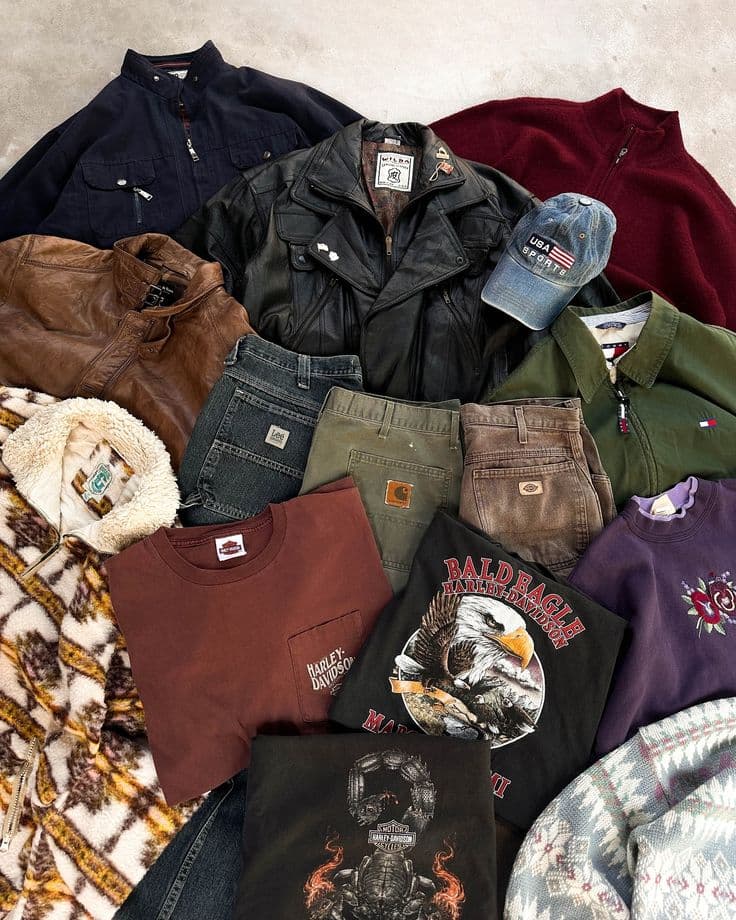
| Second-Hand Clothing | $500–$1,000 | Massive demand across Africa; buy bales and resell individually | Medium—expand to online sales, curate higher-end items | | Small Retail Shop (Essentials) | $500–$1,000 | Consumer goods remain resilient even during downturns | Medium—add inventory, move to larger space |
Agriculture & Agribusiness
Agriculture offers some of the most accessible and scalable business opportunities for entrepreneurs with limited capital. Quick-growth crop farming, focusing on maize and vegetables, can be launched with just $200–$800, leveraging short harvest cycles and the consistent demand for fresh produce—with significant room to scale by expanding land, introducing irrigation, or processing products for higher margins. Small-scale poultry farming, requiring $300–$700, taps into the growing appetite for chicken and eggs across urban and rural markets, with scalability coming from flock expansion and direct supply to restaurants and local markets. For those seeking even lower overhead, mushroom farming ($200–$600) offers a low-cost, high-yield system that serves both food and medicinal markets, with value-addition opportunities through drying, powder production, or tea products. Perhaps the most innovative model is irrigation as a service ($500–$1,000), where solar-powered pumps are rented to farmers—a model that attracts a client base of 20–70% women—and scales remarkably well by building a fleet of pumps and expanding across multiple villages, transforming smallholder agriculture into a sustainable, income-generating ecosystem.
Digital & Services
The digital services sector offers some of the most accessible and scalable pathways for entrepreneurs with limited capital. Freelance writing and content creation, requiring just $100–$500 to start, taps into the growing demand for content across industries, with international clients paying $30–$200 per article—and scalability is virtually unlimited as you build a portfolio and eventually hire other writers to expand capacity. Graphic design, also starting at $100–$500, benefits from constant demand for logos, flyers, and social media assets, with an agency model or subscription-based services offering a clear path to growth. For those with a knack for engagement, social media management ($100–$300) addresses a critical pain point for SMEs: the need for an online presence without the internal skills to manage it, enabling you to charge $100–$300 per client and scale by managing multiple accounts and building a full-service agency. Beyond the digital realm, laundry services ($200–$500) thrive in densely populated urban areas where professionals lack time, with a medium scalability path that includes adding pickup and delivery options and expanding to commercial clients such as hotels and restaurants. Together, these businesses demonstrate that with minimal upfront investment, a focus on solving real problems, and a commitment to scaling through systems and team-building, entrepreneurs can build sustainable, profitable ventures that grow far beyond their modest beginnings.
What Separates Success from Failure
The search results reveal a consistent pattern. Successful low-cost businesses share these traits:
| Factor | Why It Matters |
|---|---|
| Solve a daily need | Food, money access, phone services — these never go out of demand |
| Leverage existing skills | Entrepreneurs who start with what they already know reduce training costs and risk |
| Location intelligence | A business near hostels, offices, or busy residential areas outperforms similar operations elsewhere |
| Start small, reinvest | Small-scale vendors often reinvest daily profits to expand gradually |
| Digital first | With 26.7 million mobile money accounts in Ghana alone, mobile commerce is the new storefront |
The Digital Opportunity: Mobile Retailing Is the New Frontier
One of the most significant developments in Africa's low-cost business landscape is the rise of mobile retailing. In Accra, traders no longer need a physical stall. Their shop is in their pocket .
The numbers are staggering. In December 2025 alone, Ghanaians transacted GH¢518.4 billion through mobile money platforms — more than fourteen times the value of cheques cleared that same month . Active mobile money accounts reached 26.7 million, meaning there are now more mobile wallets than adults in the country .
This is the infrastructure that makes $1,000 businesses scalable. A young entrepreneur can launch a clothing brand from a bedroom in Madina, receive payments via mobile money, market through Instagram and TikTok, and deliver via Bolt Food — all without renting a single square foot of commercial space .
The Hidden Opportunity: Information Asymmetry and Trust
As one contributor to the IBAM podcast noted, entrepreneurs with limited capital often succeed by building trust in fragmented markets. Mapheso in Zambia expanded his marketing agency with just $1,000, growing his influence and creating opportunities for gospel conversations .
This is the same dynamic you identified in information asymmetry — the gap between what people need and what they can access. The entrepreneurs who bridge that gap profit.
In Uganda, MakaPads emerged as a social enterprise producing sanitary pads from papyrus reeds and recycled paper . The manufacturing remains deliberately low-tech and locally based. Papyrus stems are harvested from wetlands, stripped into fibers, mixed with recycled paper, and shaped into absorbent pads .
The result? Pads that are up to 95% biodegradable, chemical-free, and cost roughly half as much as imported alternatives . At its peak, production employed 225 people, including refugees, and scaled from 30,000 pads in 2009 to more than one million .
This is the model: solve a real problem, use local resources, and build trust through quality.
The $1,000 Question
The data is clear: $1,000 is enough to start a business in Africa. But the type of business matters as much as the capital.
| You should start | If you... |
|---|---|
| A food kiosk or street food business | Want daily cash flow and low overhead |
| A mobile money agent spot | Want to tap into the digital financial infrastructure |
| A phone accessories business | Want to ride the smartphone adoption wave |
| A service-based digital business | Have skills that can be sold online |
| A small-scale farming operation | Have land access and understand growing seasons |
The most important step is to start. As one contributor to the IBAM podcast noted: "The best time to plant a tree was 20 years ago. The second best time is now" .
Consistency, learning, and persistence will ultimately determine the success of any venture. With determination and creativity, Africans can turn small opportunities into meaningful sources of income and financial independence .
Summary Starting a successful small business with $1,000 or less is possible. However, to begin a business with a low initial investment, focus on an idea that's within your skillset or one that can have free or low-cost marketing options. Initial investments typically need to cover training, marketing, software, equipment and legal setup. Profitability depends on market demand, effective marketing, managing competition and efficient operations. Long-term success demands continuous optimization, reinvesting profits, customer focus, consistent marketing and seeking expert advice. Viable low-cost ventures range from freelance writing and virtual assistance to mobile personal training.
This article draws on insights from entrepreneurs across Nigeria, Ghana, Uganda, Kenya, Tanzania, and Zambia, as well as data from the Bank of Ghana, the International Food Policy Research Institute, and the Flying Food consortium.


Comments (0)