
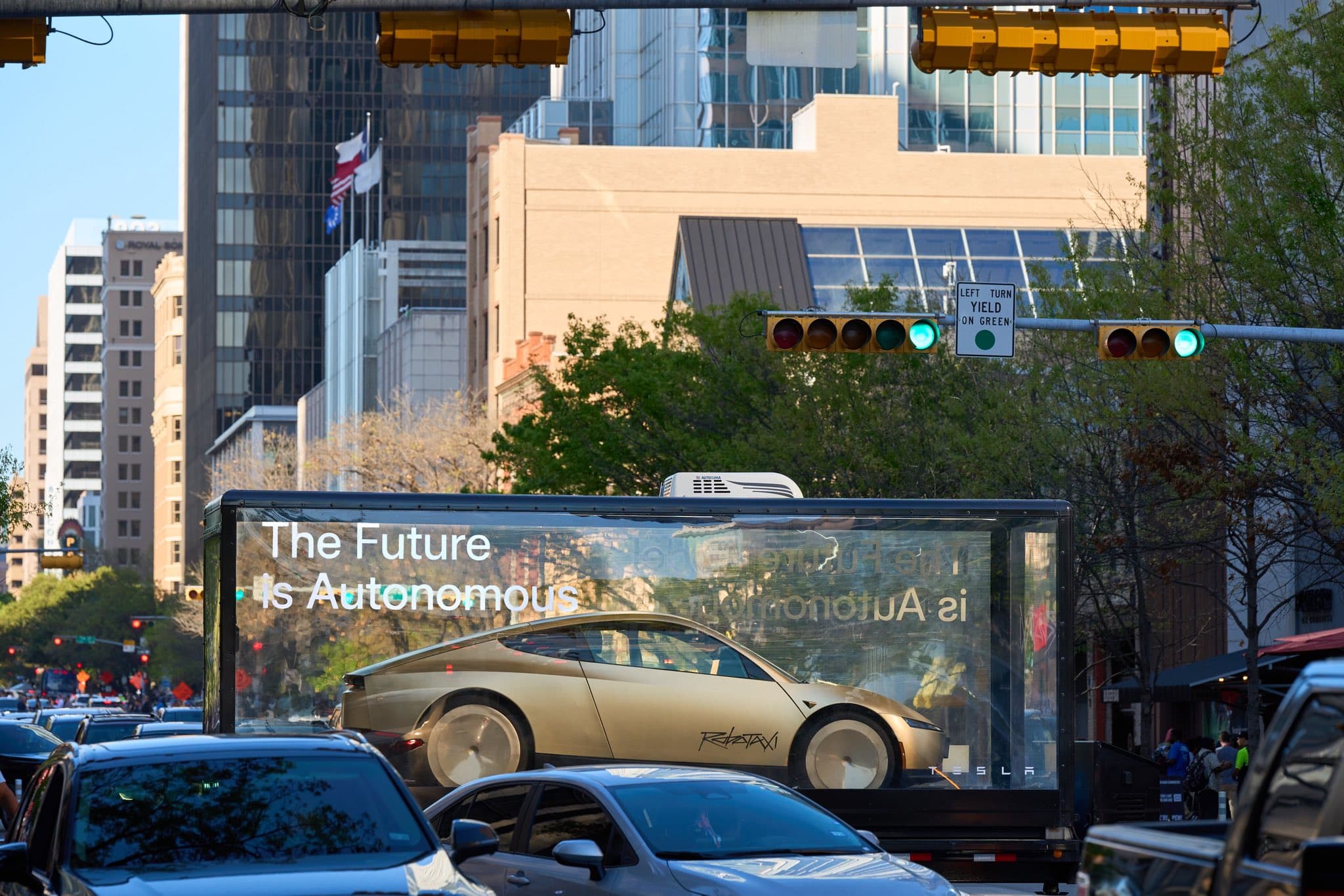
Tesla is shifting from product to distribution control
| WigWag Mobility
DALLAS – The future of ridesharing has officially arrived in North Texas. Starting this week, Tesla has rolled out its fully unsupervised Robotaxi service in Dallas and Houston, allowing users in select neighborhoods to hail a driverless ride directly through the Tesla app.
But here’s what the viral headlines won’t tell you: Tesla didn’t just launch a service. It launched a litmus test for its entire physical AI thesis—and the results are anything but certain.
The Expansion: From Austin to the Metroplex
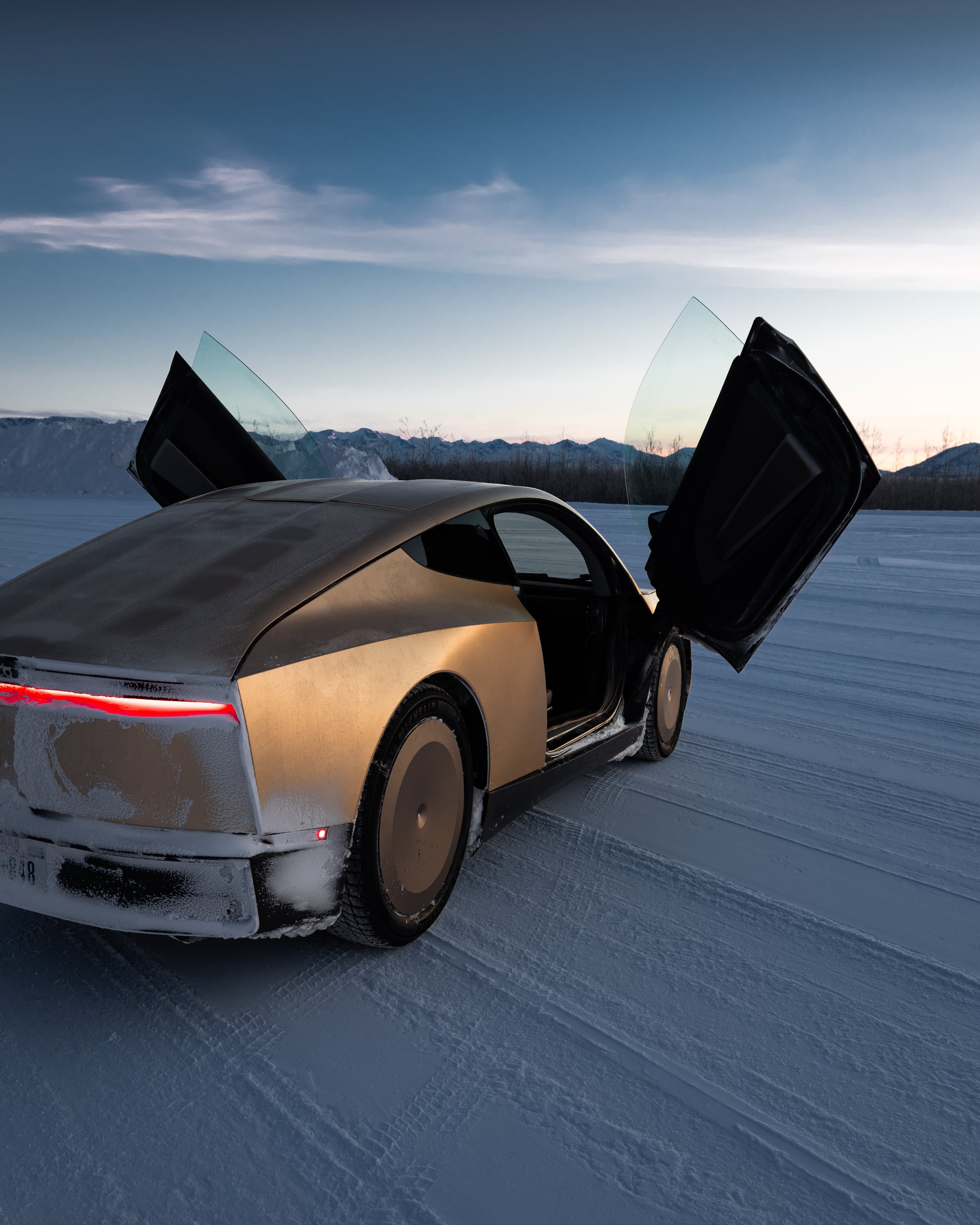
Tesla first introduced its robotaxi service in Austin in January, operating with safety monitors for several months before gradually phasing them out. Now, with the expansion to Dallas and Houston—adding to earlier launches in Austin and the San Francisco Bay Area—Tesla has extended its coverage to four major markets.
The initial fleet consists of Model Y vehicles equipped with Tesla’s latest autonomous software. The service currently operates daily from 6 a.m. to 2 a.m. local time, with introductory pricing set at a $3.25 base fare plus $1.00 per mile—a rate that early riders report is more than 50% lower than competing autonomous services.
CEO Elon Musk, true to form, took to X over the weekend with a simple message: “Try Tesla Robotaxi in Dallas & Houston!”
The Cybercab: A Purpose-Built Bet
Behind the scenes, something more significant is taking shape at Gigafactory Texas. Drone footage has captured over 50 Cybercabs—Tesla’s purpose-built, steering-wheel-free robotaxi—at the factory, with some already undergoing crash testing.
The first production Cybercab rolled off the line in mid-February, several weeks ahead of schedule. According to plans, the vehicle will enter mass production in April, though Musk has cautioned that “初期产能会慢得让人难受” (early production will be painfully slow) before ramping to an eventual target of at least 2 million units annually.
The design is radical: no steering wheel, no brake pedals, no traditional controls—a vehicle built from the ground up for a world without drivers.
The Regulatory Frontier
While Tesla pushes forward in the U.S., it has also secured a crucial international milestone. The Netherlands became the first European country to approve Tesla’s supervised self-driving system for public roads after more than a year and a half of testing on Dutch roads and test tracks.
The Dutch regulator RDW stressed, however, that vehicles equipped with Full Self-Driving “are not self-driving.” The system remains classified as a driver assistance feature, meaning the driver remains fully responsible and must maintain control at all times.
Still, the approval could pave the way for wider adoption across Europe. RDW has said it will submit an application to the European Commission, after which EU member states will vote on whether to permit the system across the bloc.
The Analyst Divide: Bull vs. Bear
Wall Street is watching closely—and it is deeply divided.
Morgan Stanley analyst Andrew Percoco called the rollout “tangible progress at a time when the market was growing increasingly skeptical about Tesla’s robotaxi expansion timeline.” He maintained a $415 price target, arguing that a successful robotaxi rollout could create a “powerful flywheel” across Tesla’s ecosystem.
ARK Invest has gone further, estimating that at its current deployment pace, Tesla will surpass Waymo’s fleet of approximately 3,000 vehicles in roughly three months. ARK also projects Tesla’s hardware cost advantage—the Cybercab could be roughly 50% less expensive per mile than Waymo’s sixth-generation robotaxi—enabling Tesla to price its service as low as roughly $0.25 per mile at scale.
Bank of America analyst Alexander Perry sees Tesla as the clear leader in autonomous driving technology precisely because its vision-only approach is more cost-effective and scalable than the lidar-heavy strategies of competitors.
But the skeptics are equally loud.
Investor Ross Gerber of Gerber Kawasaki dismissed the launch as a distraction from “the lack of earnings they will soon report,” accusing Tesla of “kicking the can down the road.”
Gary Black of The Future Fund offered an even sharper critique, calling the idea that Tesla would scale unsupervised autonomy alone “borderline head-in-the-sand delusional.” He noted that competitors like Alphabet’s Waymo, Baidu’s Apollo Go, and others are “already completing 1.0M paid unsupervised autonomous trips per week.”
Meanwhile, Uber has reportedly committed nearly $10 billion in investments to bolster its own self-driving prowess, launching Europe’s first commercial robotaxi service in partnership with Pony AI.
The Financial Reality Check
The robotaxi rollout comes at a precarious moment for Tesla financially.
Analysts expect Tesla to report first-quarter revenue of $22.08 billion on Wednesday, down 9% year over year. Adjusted EBITDA is projected at $3.217 billion, down 14.4% versus Q1 last year. Tesla reported 358,023 deliveries in Q1 2026, roughly 12,000 below Wall Street expectations.
Capex spending is expected to balloon to $19–20 billion annually as Tesla invests in new batteries, Cybercab production, Optimus robots, and AI compute. Jefferies forecasts negative free cash flow of roughly $5.5 billion in 2026. The robotaxi business, which Tesla aims to launch across 25–50% of potential U.S. markets by year-end, remains “the central uncertainty.” Analysts at Jefferies do not model any revenue from running robotaxis until 2027.
The Reality on the Ground
For all the analyst debate, the real story is unfolding on the streets of Dallas—and it is not without hiccups.
Chris Ramos, a 34-year-old Dallas resident who rushed to try the service on its first weekend, waited nearly two hours before securing a ride. The 11-mile trip took 54 minutes. Along the way, the robotaxi missed an exit, entered a highway where traffic was moving at 80 to 90 miles per hour, and then inexplicably began slowing down as if preparing to pull over. A Tesla representative appeared to take over remotely and guided the vehicle off the highway. The car then missed its final destination, took Ramos to the wrong location, and circled a hotel five times before support redirected it.
His verdict? “It’s a fun trip for the risk-loving.” Would he recommend it to his grandmother? “No.”
Tesla has also faced scrutiny following federal regulatory filings that revealed its Austin-based fleet was involved in 14 crashes during its initial launch phase, with documented issues including sudden braking, improper lane changes, and navigating over curbs.
Tesla has done something real: it has put driverless vehicles on public roads in four major American cities. The Cybercab is coming off the production line. FSD has secured its first European approval.
But the gap between a working robotaxi and a profitable business remains vast. The gap between a handful of cities and “dozens of major cities” by year-end is wider still. And the gap between what Musk promises and what Tesla delivers has, historically, been measured in years, not quarters.
Musk has said autonomous ridesharing could move the financial needle for Tesla as early as the second half of 2026: “Once it does move the financial needle in a significant way, it will really go exponential from there.”
For now, the needle is barely twitching. Morgan Stanley estimates the total addressable market for robotaxis in the U.S. at a staggering $1 trillion or more. But potential is not revenue. And revenue is not profit.
Tesla’s stock currently trades at roughly 240 times adjusted earnings—an valuation that assumes not just success, but dominance. Whether this week’s rollout marks the beginning of that dominance, or simply another chapter in a long history of delayed promises, will be determined not in headlines, but on the roads of Dallas, Houston, Austin, and the dozens of cities still to come.
The robotaxi is finally here. The real test is just beginning.


Comments (0)